
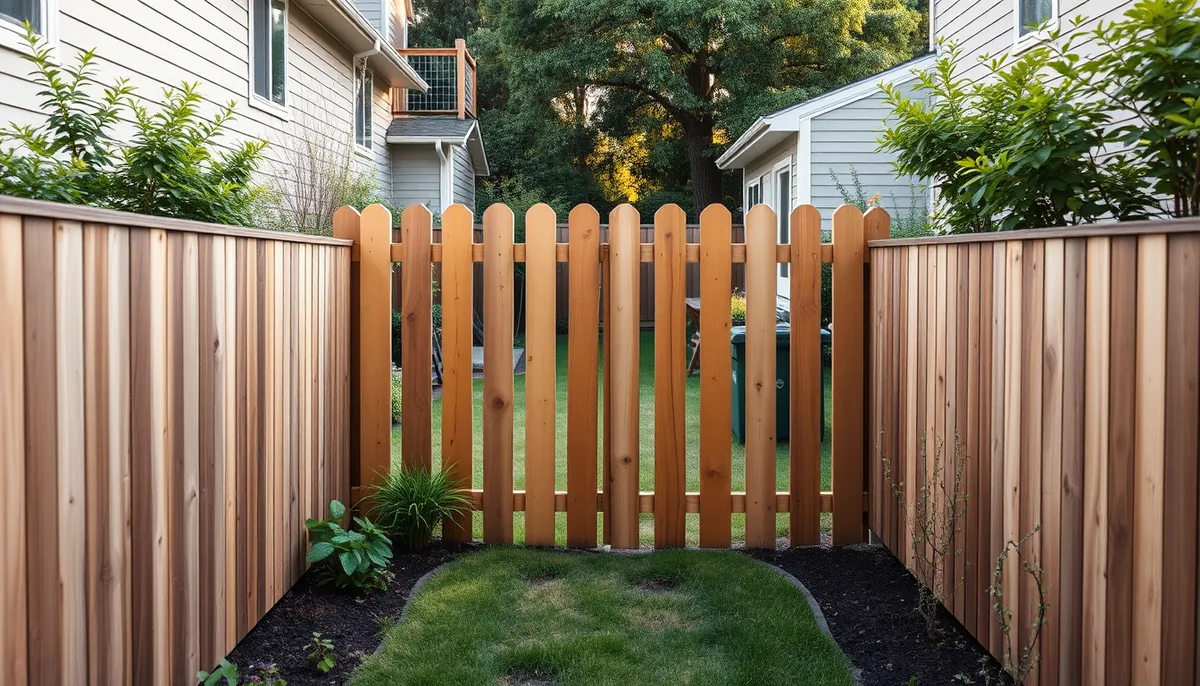
A fence is the one home improvement that literally touches your neighbor's life. Handle it well and it's a non-event; handle it badly and it's a decade of icy driveway waves. After thousands of fences, here's how the smooth ones go.
Talk First, Dig Second
The single best move is a five-minute heads-up before the project starts: "We're planning a new cedar fence along our shared line — wanted to give you a heads-up on the timing." That's it. You're not asking permission for a fence on your property, but a courtesy conversation turns a surprise (bad) into a plan (fine). Nine times out of ten the neighbor is relieved someone's finally replacing the old fence.
Know Where the Line Is
Most feuds are really disagreements about the property line. Don't guess. If it's unclear, a survey settles it for good — cheaper than a lawyer and far cheaper than tearing out a fence built a foot the wrong way. We'll help you locate it before we set a single post.
The "Good Side" Question
Traditionally the finished, smooth side of a fence faces out — toward the neighbor and the street. If you'd rather both sides look finished, a good-neighbor fence solves it entirely: it looks the same from both yards, so nobody gets the "ugly side," and the whole conversation disappears.
Splitting the Cost (Optional)
If the fence genuinely benefits both households, some neighbors split the bill — but never assume it. Offer if you like, expect nothing, and keep it friendly. A fence you paid for entirely is a lot cheaper than a resentment you carry for years.