
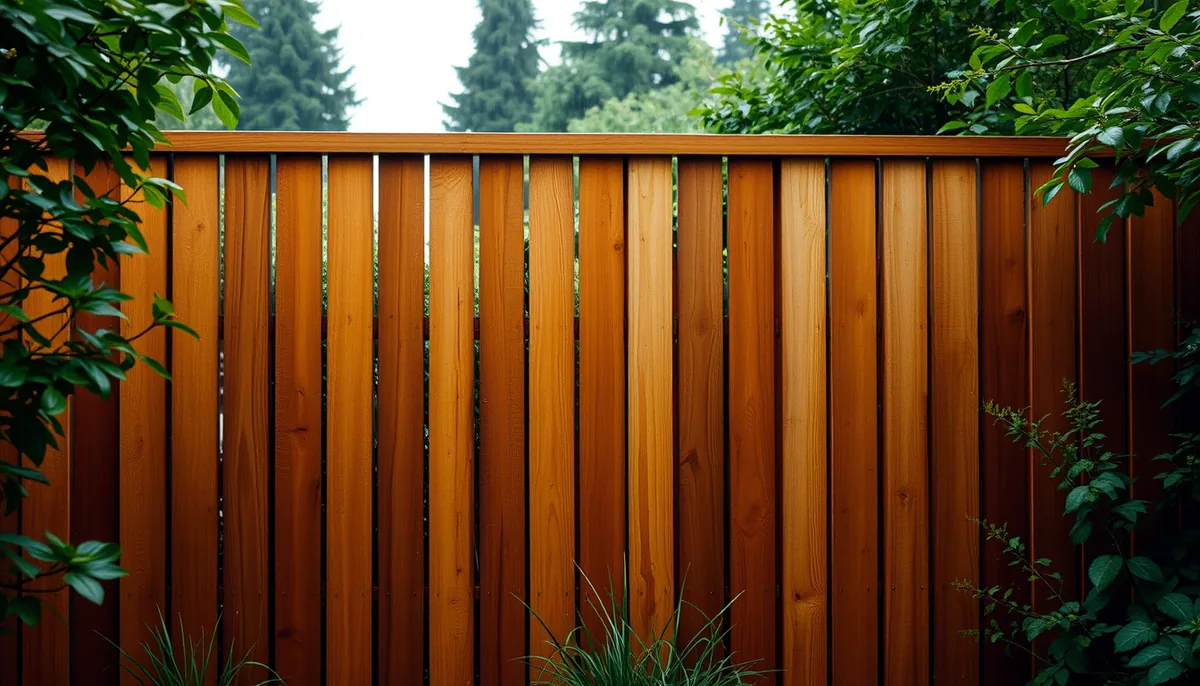
Almost every fence conversation we have in Portland comes down to three materials: cedar, vinyl, or ornamental steel. All three can look great. What separates them here isn't the brochure — it's 150 rainy days a year and a lot of cedar-eating moisture. Here's the honest version.
Western Red Cedar
Cedar is the Portland default for a reason: it's naturally rot- and insect-resistant, it takes stain beautifully, and a good-neighbor or board-on-board cedar fence just looks like the Pacific Northwest. The trade-off is maintenance — left alone, cedar silvers to gray in a couple of seasons (not damage, just color) and wants a stain or seal every 2–3 years to stay warm and golden. Set the posts in concrete below the frost line and cedar will outlast the people who complain about staining it.
Vinyl
Vinyl is the "install it once and forget it" option. It never needs painting, never rots, and a quick hose-down in spring is the entire maintenance plan — which is why it's a favorite for pool enclosures and rental properties. The honest caveats: cheaper big-box vinyl can bow and yellow, so we use commercial-grade panels with aluminum-reinforced bottom rails; and vinyl is a look you either love or don't. It won't ever have cedar's warmth.
Ornamental Steel (and Chain-Link)
When you want security or curb appeal without boxing in the yard or the view, powder-coated steel and aluminum are the answer — a front yard, a pool code fence, a hillside where you don't want to lose the valley. Chain-link, meanwhile, is still the most economical way to fence a big lot or a dog run, and black vinyl-coated chain-link dresses it up more than people expect.
So Which One?
If you want privacy and warmth and don't mind a weekend of staining now and then: cedar. If you want to never think about it again: vinyl. If you want to see through it: steel. The wrong answer is a cheap version of any of them — that's the fence you replace in five years. When we walk your yard, we'll tell you which way the site itself is leaning.