
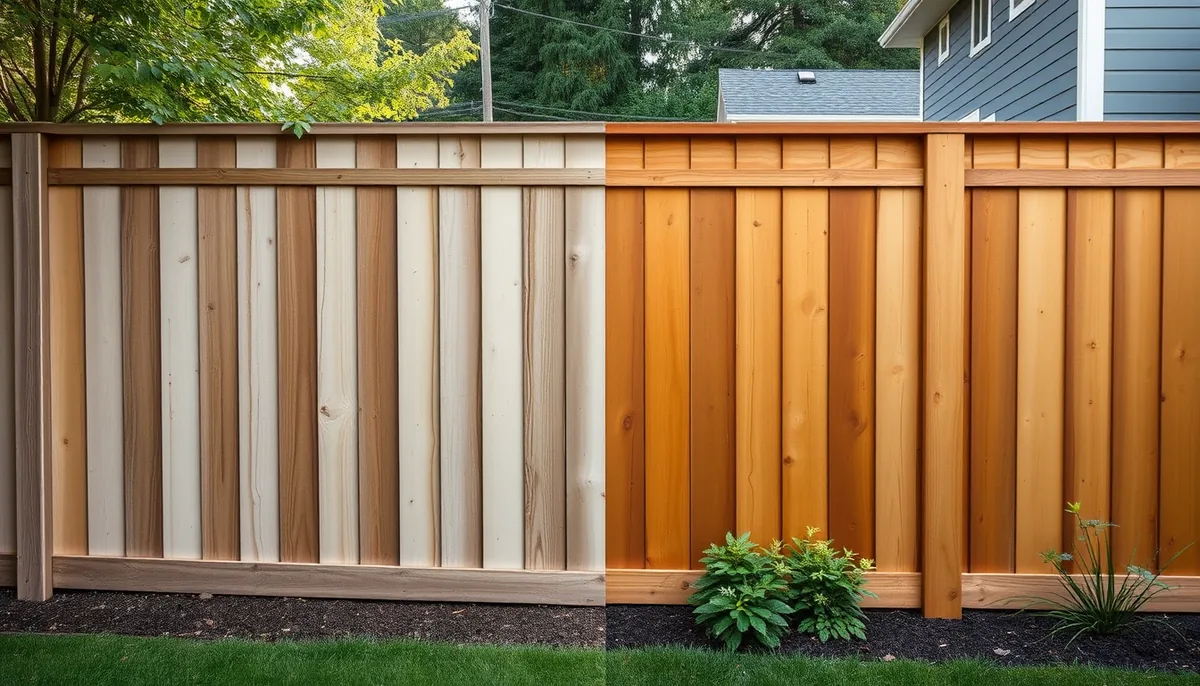
Your cedar fence went in warm and golden, and now, a few Portland winters later, it's a weathered silvery-gray. First, the good news: that's not rot, and it's not a failure. It's UV and moisture doing exactly what they do to unprotected wood. But it is a signal worth listening to.
What the Gray Actually Means
The gray is a thin, weathered surface layer — the wood's natural oils and color washed and bleached out of the very top. Structurally the fence is fine. What the gray tells you is that the surface is now unprotected, and unprotected cedar in a wet climate soaks up more water, which over years is what actually shortens a fence's life. So gray isn't an emergency — it's your two-minute warning to reseal.
Restaining vs. Replacing
Here's what surprises people: a gray fence usually doesn't need replacing — it needs a clean and restain. We wash the surface (sometimes a light sanding on the roughest boards), let it dry, and apply a penetrating semi-transparent stain. The gray disappears and the warm cedar tone comes roaring back, often in a single day for a typical yard. It's a fraction of the cost of a new fence.
How Often
In the Portland climate, plan on every 2–3 years for a stain that keeps the color and the water out. Fences that get morning sun and good airflow go longer; shady, damp corners go shorter. If you can't remember the last time it was done, it's time. Catch it at gray, not at green.