
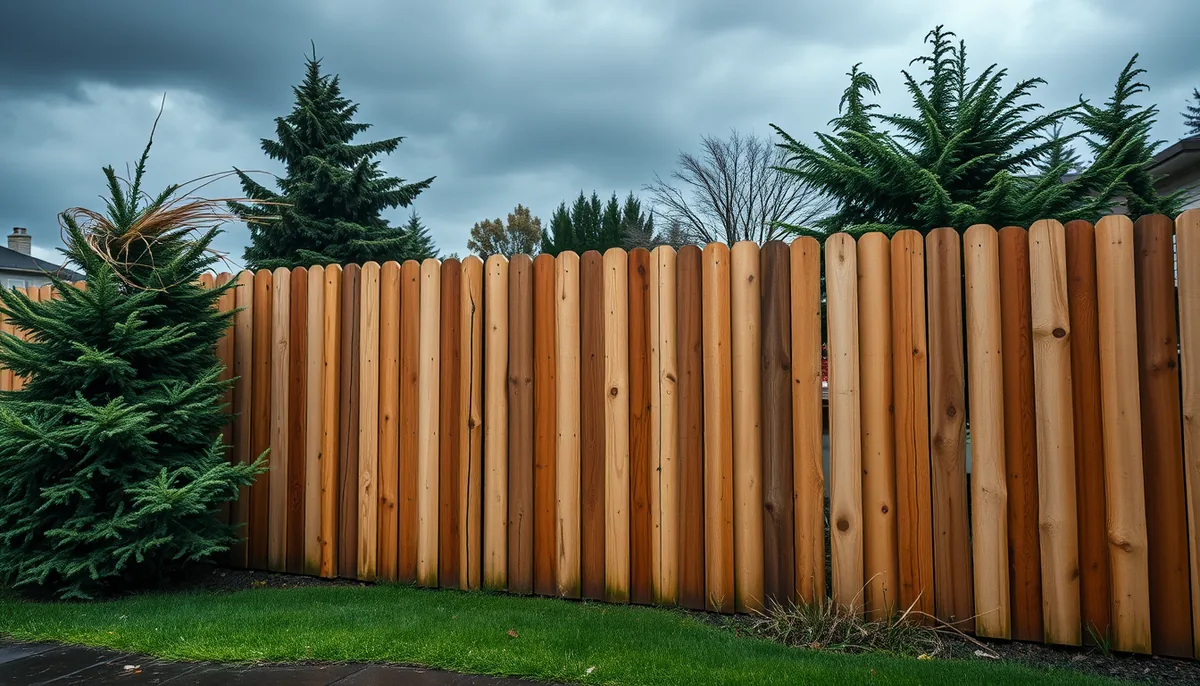
Every January we get the same calls: a windstorm rolled through and a fence came down. Usually it wasn't the wind's fault — it was something small that had been quietly getting worse all year. Here's the five-minute walk-around that saves you a repair bill.
1. Wiggle the Posts
Grab the top of each post and give it a firm push. A solid post doesn't move. A post that rocks in the ground is your most likely failure point — the soil around it has loosened, and a saturated-soil windstorm is exactly when it'll let go. Flag any movers now, before the ground turns to soup.
2. Clear the Vines and Lean-To's
Ivy and blackberry act like a sail and add weight, and anything leaning on the fence (a trellis, stacked wood, a wheelbarrow) turns wind load into leverage. Cut it back and clear it off the fence line before storm season.
3. Look Up
The number-one fence-killer in the valley isn't wind — it's a limb. Walk the fence line and note any dead or overhanging branches above it. That's a call to an arborist, not a fence company, but it's the cheapest fence insurance there is.
4. Check the Gates
Gates take the most abuse. Make sure hinges are tight and the gate isn't dragging — a sagging gate stresses the hinge post every time the wind grabs it.
5. Fix Small Now
A cracked rail, a wobbly post, a loose bracket — these are cheap in October and expensive in January. If your walk-around turns up a mover or a lean, get it addressed before the first big blow. We do storm-season repair visits for exactly this.