
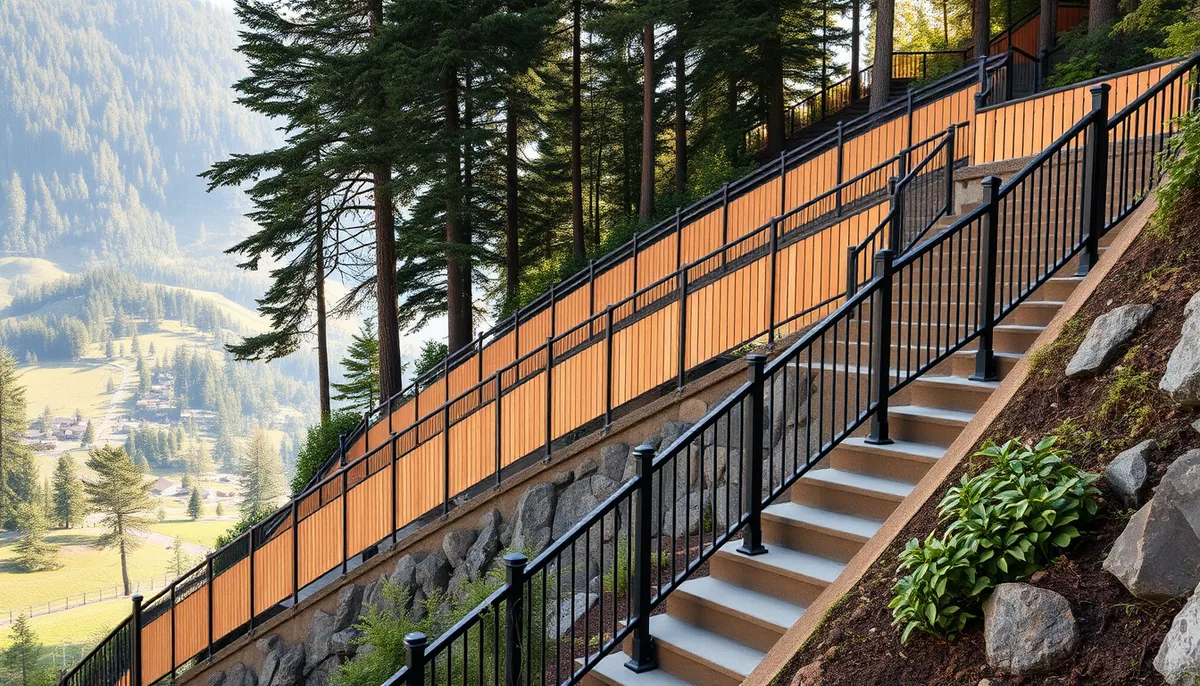
Some fences are a straight shot across a flat yard. This one was not. The backyard in West Linn fell away at a genuine 38 degrees — steep enough that you braced yourself walking down it — and the homeowners had one non-negotiable: keep the valley view they bought the house for.
The Problem With a Slope
On steep ground you can't just tilt a fence to follow the grade — it looks drunk and the posts fight gravity. The two real options are racking (angling the panels with the slope) or stepping (keeping each section level and dropping it down like a staircase). Racking a solid privacy fence on a 38° pitch would have created huge triangular gaps at the bottom of each panel. Stepping a tall cedar fence would have walled off the view entirely.
The Solution
We stepped the fence — but built it in powder-coated black ornamental steel instead of solid cedar, so you can see straight through it to the valley. Each level section was set on posts sunk deep into the hillside with oversized concrete footings to resist the constant downhill load. Where the yard met the patio up top, we transitioned to matching cedar for warmth. The result reads as one intentional design, not a compromise.
Why It Held
The engineering that never shows is the part that matters: footing depth, post spacing tightened for the load, and drainage so water doesn't undermine the uphill posts. A year of PNW rain later, it hasn't moved. That's the difference between a fence on a hill and a fence that belongs on one.